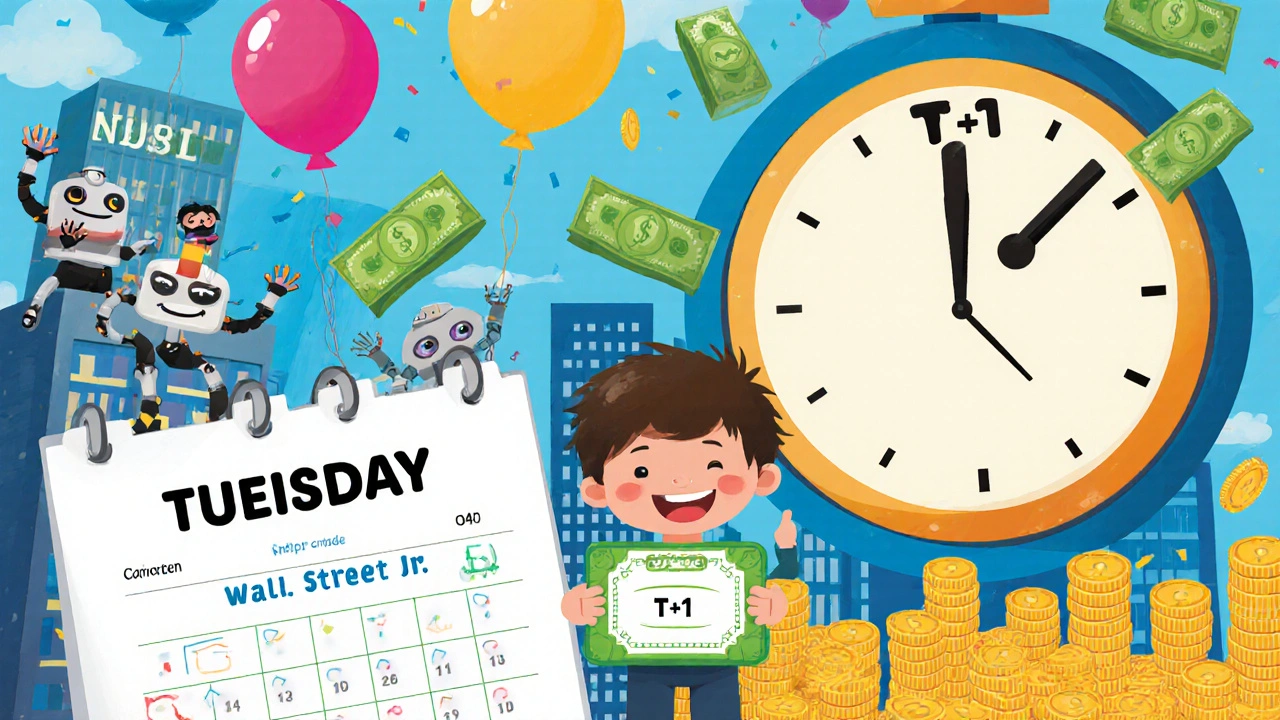
Trade Settlement Cycle: How T+1 Changes Your Investing Timeline
When you buy a stock, it doesn’t instantly become yours. That delay is the trade settlement cycle, the time between when a trade is executed and when ownership and payment are officially exchanged. Also known as T+1, it’s now the standard in U.S. markets — meaning your trade settles just one business day after you hit buy. This isn’t just paperwork. It affects when you get dividends, when you can sell again, and even how much risk you’re exposed to if the market moves fast.
The T+1 settlement, the current industry standard where trades settle one business day after execution replaced the old T+2 system in May 2024. Why? Because faster settlements reduce counterparty risk — the chance that one side of the trade fails to deliver cash or shares. But for regular investors, it means less waiting. If you buy Apple on Monday, you own it Tuesday morning, not Wednesday. That also means if you sell on Tuesday, you get the cash Wednesday, not Thursday. This tightens your cash flow, especially if you’re trading frequently or relying on funds for other investments.
It’s not just about speed. The settlement risk, the chance that a buyer or seller defaults before the trade completes used to be higher under T+2. Now, with less time between trade and settlement, brokers and clearinghouses have less exposure. But you still need to watch out. If you buy a stock on Friday and the company announces a dividend on Saturday, you won’t qualify unless you owned it before the ex-dividend date — and the settlement clock doesn’t pause for holidays or announcements. Timing still matters.
And here’s the catch: even with T+1, you can’t use the cash from a sale to buy another stock until after settlement. So if you sell $5,000 worth of stock on Monday, you can’t use that $5,000 to buy something else until Wednesday. Brokers call this “good faith violation” territory. Do it too often, and your account gets restricted. That’s why smart traders keep a buffer of settled cash — not just what’s sitting in their account balance.
What you’ll find in this collection are real breakdowns of how settlement timing impacts dividends, margin calls, ETF trading, and even crypto conversions. You’ll see how T+1 changed the way people rebalance portfolios, why some brokers now offer instant settlement for certain assets, and how missed settlement windows have cost investors thousands in lost dividends. No theory. No fluff. Just what actually happens when the clock ticks from trade to cash.