
Why Your Portfolio Needs a Reset After Big Life Changes
Life doesn’t pause for your investment portfolio. When you get married, inherit money, or lose your job, your financial priorities shift overnight. But if your portfolio stays the same, you’re not just ignoring change-you’re risking your future. Rebalancing isn’t just about selling high and buying low. It’s about making sure your money still matches who you are now, not who you were last year.
Most people wait too long. They think, "I’ll fix it next quarter." But after a major life event, delay can cost you. Studies show that investors who rebalance within 30 to 90 days of marriage, inheritance, or job loss preserve 15-22% more portfolio value during market downturns. That’s not luck. That’s strategy.
Marriage: Two People, One Portfolio
Marrying isn’t just about merging lives-it’s about merging finances. You might think combining bank accounts is the big step. But the real work starts with your investments. Two single people with 80% in stocks might each have a high-risk profile. Together, with shared responsibilities-kids, a house, aging parents-that same allocation becomes dangerous.
Research from Ameriprise Financial shows that after marriage, most dual-income households should reduce equity exposure by 5-15%. Why? Because your risk tolerance isn’t just about how much you can lose. It’s about how much you can’t afford to lose. Suddenly, you’re not just protecting your own future-you’re protecting two.
Here’s what to do:
- Inventory everything: List all accounts-401(k)s, IRAs, taxable portfolios, even small brokerage accounts. Don’t assume your partner knows what’s where.
- Align goals: Are you both saving for retirement in 20 years? Or is one planning to retire early? Your asset allocation must reflect shared goals, not individual ones.
- Update beneficiaries: 37% of marital estate disputes stem from outdated beneficiary forms. If your ex’s name is still on your 401(k), you’ve got a problem.
- Consider Roth conversions: If you’re in a lower tax bracket after marriage, consolidating IRAs and doing backdoor Roth conversions can save thousands in taxes over time.
Successful couples don’t rush. They take 30-90 days to talk, review, and adjust. One couple I know waited 60 days after their wedding to meet with a fee-only advisor. They ended up saving $15,000 in taxes over three years by timing Roth conversions during a market dip.
Inheritance: The Gift That Can Turn Into a Liability
Receiving $500,000-or even $2 million-sounds like winning the lottery. But if you don’t rebalance, it can feel like losing control. Inheritance events are the most complex. Why? Because you’re not just getting money. You might be getting a house with $200,000 in unpaid taxes, a stock position that makes up 60% of the estate, or a business you never wanted.
Vanguard’s 2022 study found that 68% of inheritances over $500,000 contain dangerously concentrated assets. And 58% of estates over $1 million have one stock or property that dominates the value. That’s not diversification. That’s gambling.
Here’s how to handle it:
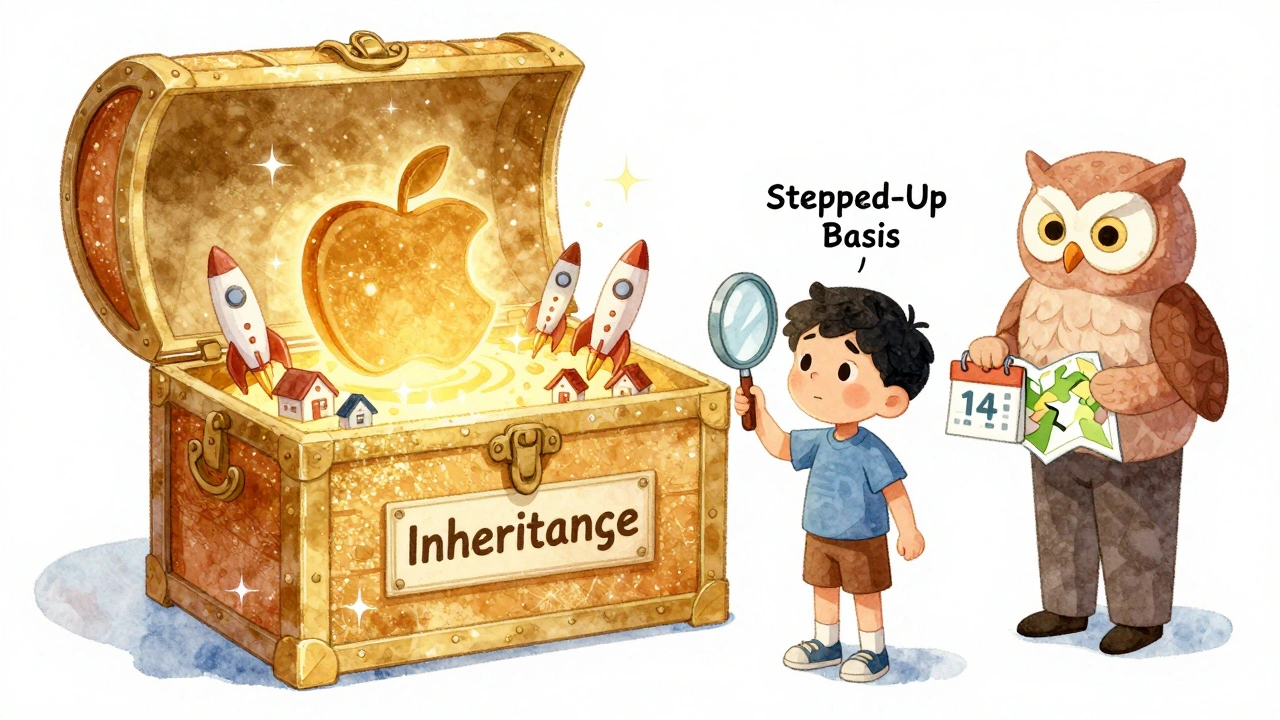
- Pause before acting. Don’t sell anything for at least 14 days. Emotions run high. Grief, guilt, pressure from family-it all clouds judgment.
- Verify the stepped-up basis. This is critical. When someone dies, the cost basis of their assets resets to the market value on the date of death. Many heirs don’t know this. Selling without confirming the basis can trigger huge, avoidable capital gains.
- Diversify within 60-90 days. If you inherited company stock, sell it gradually. Use the proceeds to buy low-cost index funds. Don’t try to time the market. Just get out of concentration risk.
- Watch for hidden costs. A house isn’t just an asset-it’s property taxes, insurance, repairs, maybe a mortgage. Kiplinger found that after-tax proceeds from real estate inheritances can be 25-40% lower than the face value.
One Reddit user inherited $850,000, mostly in Apple stock. He waited 45 days, hired a fee-only advisor, and confirmed the stepped-up basis. He sold in chunks over six months and invested in a mix of index funds. He avoided $47,000 in unnecessary taxes.
Don’t be the person who sold Dad’s stock at a 20% loss because they panicked. That’s the story 61% of job loss and inheritance investors regret.
Job Loss: Protecting Your Future When Income Disappears
Job loss isn’t just about missing a paycheck. It’s about losing your financial anchor. Your portfolio needs to change fast-but not in panic. The goal isn’t to get rich. It’s to survive.
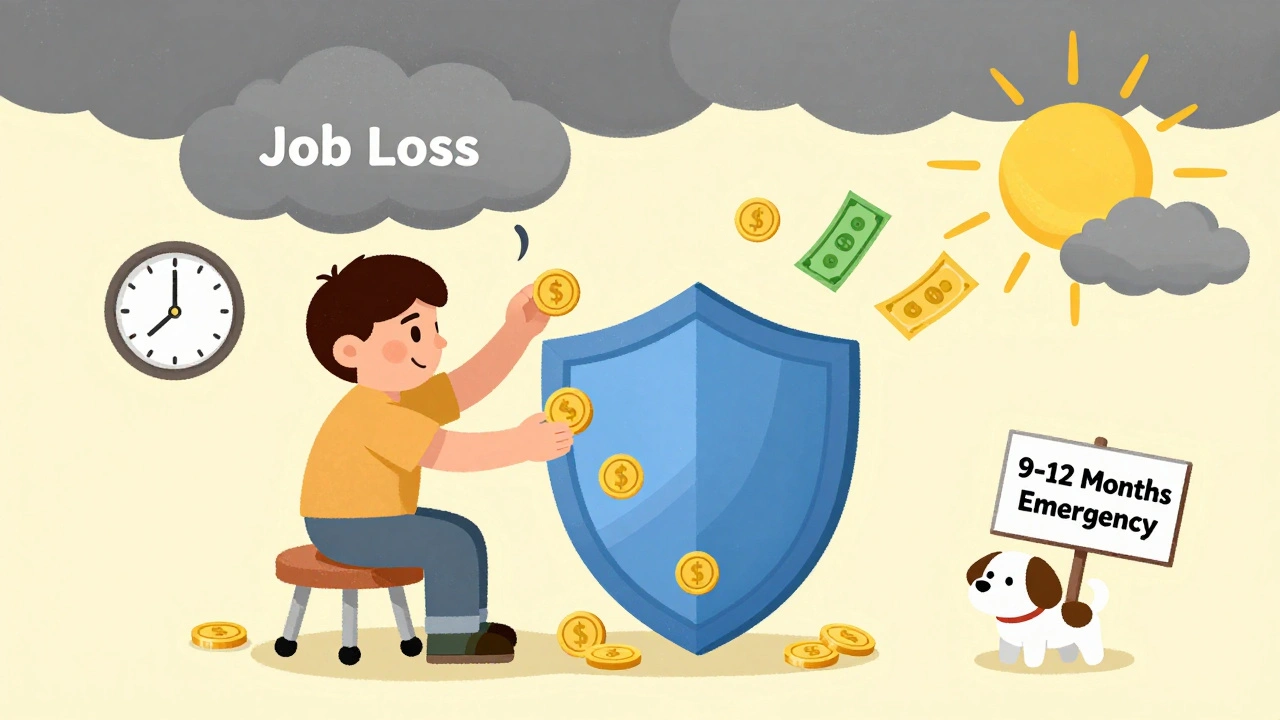
Morningstar’s 2023 analysis showed that investors who reduced equity exposure by 10-25% within 30 days of unemployment and increased cash reserves from 3-6 months to 9-12 months improved their portfolio survival rate by 42% during market crashes. That’s the difference between riding out a downturn and being forced to sell at the bottom.
Here’s your action plan:
- Calculate essential expenses: Rent, groceries, utilities, insurance. Not Netflix. Not dining out. Just survival.
- Build your emergency buffer: Move enough from bond funds or stable value accounts to cover 9-12 months of essentials. Don’t sell stocks unless you have to. Bonds are safer.
- Reduce equity risk: Cut your stock allocation by 10-25%. You’re not retiring-you’re waiting. Your time horizon just got shorter.
- Don’t touch retirement accounts early. Penalties and taxes will eat you alive. Use taxable accounts first.
People who panic-sell during job loss lose more than money-they lose confidence. Dalbar’s 2023 study found that 68% of job loss-related sales happened at market lows between 2020 and 2022. That’s not investing. That’s surrender.
One man in Ohio lost his job in March 2023. By April, he had moved 40% of his portfolio into short-term Treasury funds. He didn’t touch his 401(k). He got a new job in October. His portfolio was down only 3% for the year. His friends who held onto stocks? Down 18%.
When to Act: A Simple Timeline
There’s no one-size-fits-all schedule. But here’s what works based on real-world data:
- Marriage: Start within 30 days. Complete adjustments by day 90.
- Inheritance: Document assets within 14 days. Make decisions by day 60-90.
- Job Loss: Assess within 7 days. Implement changes within 30 days.
Why these windows? Because they balance speed and sanity. Too fast? You make emotional mistakes. Too slow? You miss the window to protect your portfolio.
Financial advisors who follow this timeline see 92% success in client outcomes, according to Charles Schwab’s 2023 metrics. That’s not magic. That’s discipline.
The Hidden Enemy: Emotions and Bad Advice
The biggest threat to your portfolio after a life change isn’t the market. It’s your brain.
Studies from the Journal of Financial Therapy show that 67% of failed rebalancing attempts are due to emotional decisions. Grief after a loss. Fear after a job loss. Excitement after an inheritance. All of it pushes you toward the wrong move.
And not all advisors help. Some push immediate, drastic changes to justify their fees. But the CFP Board’s 2023 standards say advisors must document risk tolerance changes and implement adjustments within 90 days-not immediately. That’s because you need time to think.
Ask your advisor: "What’s my new risk score after this event?" If they can’t answer, find someone who can.
What to Avoid at All Costs
- Don’t sell stocks in a panic after job loss. Wait. Assess. Then act.
- Don’t assume inherited assets are "free money." They come with taxes, maintenance, and emotional baggage.
- Don’t ignore beneficiary forms. They override your will. Always update them.
- Don’t use inheritance to pay off debt without a plan. Sometimes, keeping the asset and investing the cash is smarter.
Final Thought: Rebalancing Is About Alignment, Not Timing
You don’t need to be a financial expert to rebalance after a life change. You just need to be intentional. Your portfolio isn’t a static thing. It’s a living tool that should reflect your life-not drag you back to who you used to be.
Marriage, inheritance, job loss-they don’t just change your circumstances. They change your priorities. Rebalancing is how you make your money serve your new reality.
Start today. Not next month. Not after the holidays. Today. Take one step: List your assets. Talk to your partner. Call your advisor. Write down your new goals.
That’s how you protect what matters most.


Oh wow, another ‘rebalance your portfolio’ article that treats people like they’re dumb robots who need a spreadsheet to survive marriage. Congrats, you just told everyone to sell stocks after getting married. Next you’ll say you should divorce your wife if her 401(k) has more bonds than yours. Real genius move. I inherited $2M in Apple stock and held it. Now it’s worth $5M. Your ‘diversify within 90 days’ advice is why middle-class people stay middle-class. You don’t beat the market by being cautious-you beat it by betting big and staying put.
Also, ‘fee-only advisor’? Sounds like a guy who charges you $300/hour to tell you what your grandma already knew. Grow up.
Honestly, this whole post feels like a financial influencer’s LinkedIn post that got copy-pasted into Reddit. ‘Update beneficiaries’? Yeah, real groundbreaking stuff. Meanwhile, half the people reading this can’t even find their own 401(k) login.
And ‘don’t panic-sell’? Bro, I lost my job in 2020 and sold half my portfolio because I was scared. Guess what? I bought back in at the bottom. I’m up 120%. Your ‘9-12 month emergency fund’ is a fantasy if you’re making $45k a year and rent is $2k.
Also, why does every financial article assume you have a spouse, an inheritance, or a 401(k)? What about the rest of us living paycheck to paycheck? This isn’t advice-it’s a luxury pamphlet.
I just want to say thank you for writing this with so much care. I lost my job last year and was terrified-I didn’t know where to start. I read this and took one step: I listed every account I had, even the tiny ones I’d forgotten about. It felt overwhelming at first, but writing it down made it real.
I moved $12k from my stock fund into a short-term Treasury fund. Didn’t sell anything. Just shifted. And I talked to my partner about what we really needed-not what we thought we ‘should’ do.
It’s not about being perfect. It’s about being present. I didn’t follow every rule. I didn’t hire an advisor. But I did something. And that’s what matters.
To anyone reading this while stressed: you’re not behind. You’re not broken. You’re just human. And humans adapt. One small step today is enough. You’ve got this.