
Credit Check Impact Calculator
How Many Hard Pulls Do You Have?
Your Credit Impact
Estimated Score Impact
How This Works
Based on FICO data:
- Standard credit history: -5 to -10 points per hard pull
- Thin credit history: -15 to -20 points per hard pull
- Impact fades after 12 months
When you apply for a personal loan, credit card, or even rent an apartment online, you’re probably not thinking about what’s happening behind the scenes with your credit report. But whether the lender does a soft pull or a hard pull can make a real difference in your credit score-and your chances of getting approved. Many people don’t even realize a credit check happened until they see a dip in their score. And that’s where confusion sets in.
Here’s the simple truth: one type of credit check doesn’t hurt your score at all. The other can knock off 5 to 20 points. And in a world where 750 is the new 700 for good loan rates, that difference matters.
What’s the difference between a soft pull and a hard pull?
A soft pull, also called a soft inquiry, is when someone checks your credit report for reasons that aren’t tied to you applying for new credit. Think of it like window shopping. You’re not buying anything-you’re just looking. Lenders use soft pulls to preapprove you for offers. Credit monitoring apps like Credit Karma or Capital One’s CreditWise use them to show you your score. Employers might run one during a background check. Landlords sometimes use them for rental applications. And here’s the key: soft pulls don’t affect your credit score at all.
A hard pull, on the other hand, is when a lender checks your credit because you’ve officially applied for credit. That’s your formal request: “I want this loan.” That’s when they dig into your full credit history-your payment track record, how much debt you have, how long you’ve had accounts, and more. Hard pulls show up on your report for two full years. And yes, they can lower your score.
The same credit report data is accessed in both cases. The difference isn’t in what’s seen-it’s in why it’s seen and whether it counts against you.
How much does a hard pull hurt your credit score?
Most people think one hard inquiry will tank their score. It’s not that dramatic. For most, a single hard pull drops your FICO score by 5 to 10 points. But it’s not the same for everyone.
If you’ve got a thin credit file-say, you’ve only had two credit cards for three years-a hard pull can knock off 15 to 20 points. Why? Because lenders see less history to judge you by. One missed payment or new account looks bigger. FICO’s own data shows this.
And it’s not just about the number. It’s about timing. If you’ve got three hard pulls in the last 90 days, mortgage lenders often reject you outright-even if your score is still above 700. Jumbo loans? Even stricter. Some lenders won’t approve anyone with more than two hard inquiries in the past six months.
But here’s the good news: the impact fades fast. After about 12 months, most scoring models stop counting the inquiry against you-even though it stays on your report for two years. So if you’re planning a big move like buying a house next year, don’t panic if you applied for a car loan six months ago.
When do online lenders use soft pulls vs. hard pulls?
Online lenders have gotten smarter. They know consumers hate surprises. So most of them now use a two-step process.
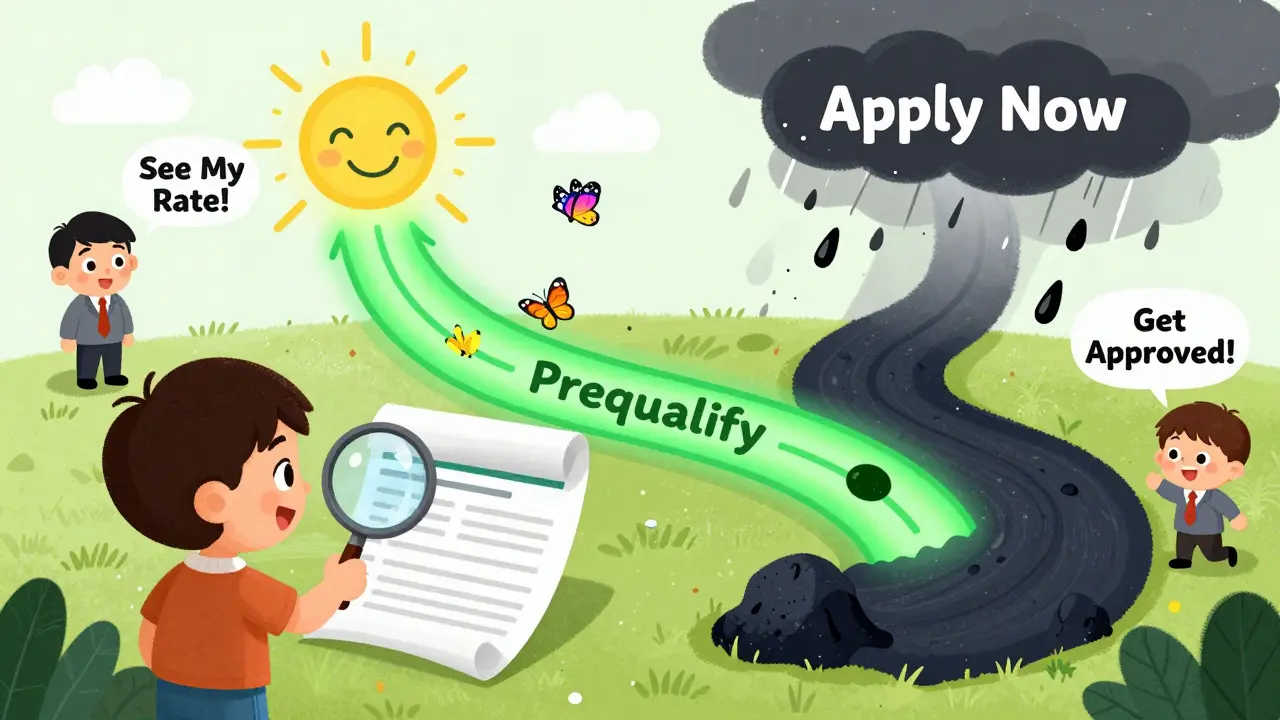
Step one: Soft pull. You enter your name, income, and maybe your Social Security number. They run a quick check. You see your potential interest rate, monthly payment, and loan amount-all without touching your score. This is called prequalification. Over 90% of top online lenders like SoFi, LendingClub, and Upstart use this. In fact, a 2023 LendEDU survey found 93% of major digital lenders start with soft pulls.
Step two: Hard pull. Only if you say “yes” to the offer do they do the full credit check. That’s when your score takes a hit. And that’s when they lock in your final rate.
This system isn’t perfect. Some users report being tricked into hard pulls. Trustpilot data from Q2 2023 shows SoFi alone got 327 complaints from people who thought they were just checking rates but ended up with a hard inquiry. Why? Because the button said “See My Rate” instead of “Prequalify.” The wording fooled them.
Always look for the words “prequalification” or “soft pull.” If it says “apply now,” “submit,” or “get approved,” you’re likely triggering a hard pull.
Shopping for loans? There’s a loophole.
If you’re shopping around for a car loan, student loan, or mortgage, you’re not alone. And the credit scoring system knows it. FICO and VantageScore have built-in protections.
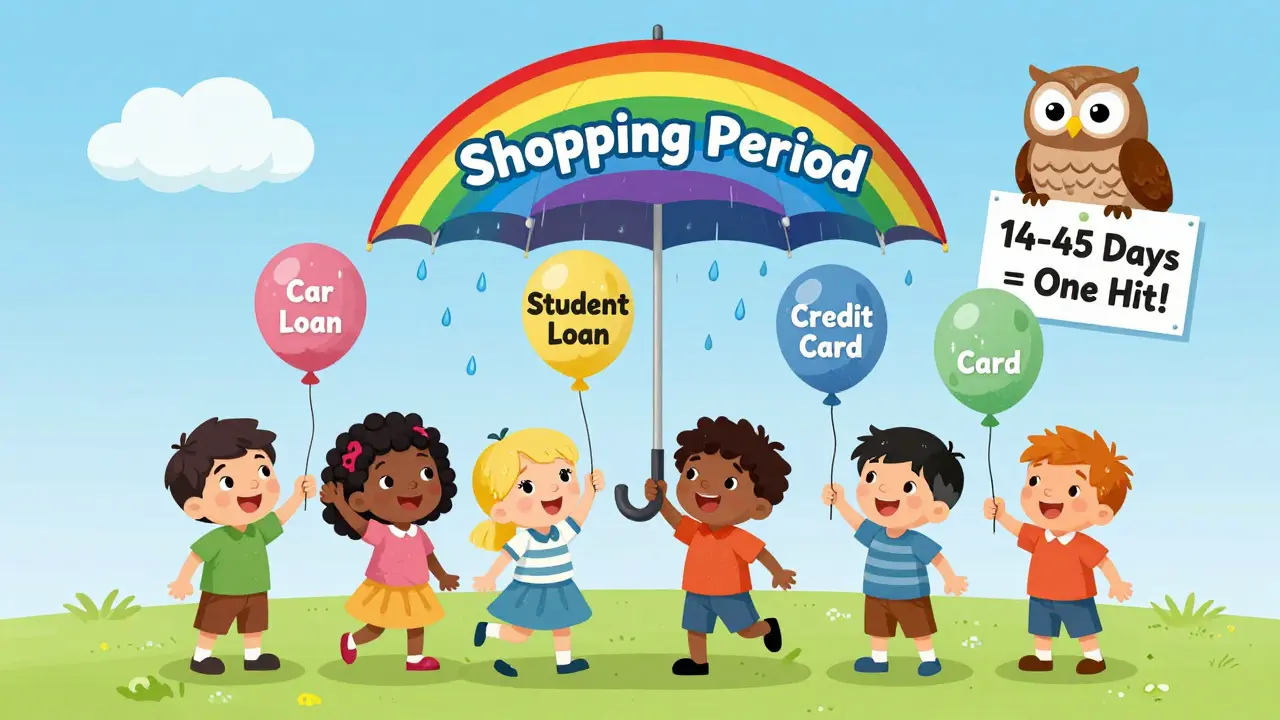
When you apply to multiple lenders within a short window-usually 14 to 45 days depending on the scoring model-all those hard inquiries get counted as one inquiry. That’s called the “shopping period.”
So if you’re looking at five lenders for a car loan, and you do it all in two weeks? Your score takes one hit, not five. That’s why financial advisors always say: don’t spread out your loan shopping. Do it in a tight window.
But here’s the catch: this only works for auto, mortgage, and student loans. If you’re applying for five credit cards over a month? Each one counts separately. And that’s when your score can really take a dive.
What about rental applications and employment checks?
Landlords and employers often run credit checks. But are they soft or hard?
It depends. Most landlords use soft pulls now-especially if they’re using services like TransUnion’s SmartMove or Experian’s RentBureau. But not all. Some smaller landlords still do hard pulls. A 2022 RentCafe survey found 63% of renters were confused about which type of check their landlord ran.
Employers? Always soft pulls. The Fair Credit Reporting Act doesn’t let them do hard pulls unless you’re applying for a job that involves handling money or security clearance. Even then, they need your written permission.
If you’re unsure, ask. A reputable landlord or employer will tell you.
How to protect your credit score from unwanted hard pulls
You can’t stop every hard pull. But you can control the ones that matter.
- Use prequalification tools before applying. Always start with soft pulls to compare offers.
- Limit applications to three lenders max within a 30-day window if you’re shopping for a loan.
- Check your credit report quarterly at AnnualCreditReport.com. That’s the only free, government-authorized site. Look for hard pulls you didn’t authorize.
- Dispute unauthorized inquiries. If you see a hard pull from a lender you never applied to, file a dispute with the credit bureau. According to the CFPB, 68% of these disputes result in removal.
- Turn off preapproved offers if you’re worried about spam. Visit OptOutPrescreen.com to stop soft pulls from credit card issuers. It won’t hurt your score-but it will reduce temptation.
And here’s a pro tip: if you’re using Credit Karma, you can see every soft pull labeled as “others who have viewed your report.” Hard pulls show up as “companies that have viewed your report.” That’s how you tell them apart.
The future of credit checks in online lending
The industry is changing fast. In 2023, Experian launched a new feature that lets you block entire categories of lenders from doing hard pulls. Want to stop auto lenders from checking your credit? You can. It’s still new, but it’s a sign of things to come.
The Consumer Financial Protection Bureau proposed new rules in November 2023 requiring lenders to get separate, clear consent before doing a hard pull. No more burying it in terms and conditions. You’ll have to check a box that says, “I authorize a hard credit check.”
By 2025, J.D. Power predicts 95% of online lending interactions will start with a soft pull. That could cut 200 million unnecessary hard inquiries every year.
But there’s still a dark side. Some lenders run multiple soft pulls during the application process-trying to tweak your offer. If you’re rejected and reapply, they might check again. And if you’re not told, you won’t know. That’s called “inquiry stacking,” and it’s a growing complaint to the CFPB.
Final takeaway
Soft pulls are safe. Hard pulls matter. Don’t fear credit checks-but don’t invite them either.
Use prequalification tools. Compare offers in a short window. Only apply when you’re ready. And always check your credit report before and after applying. You don’t need to be an expert. You just need to know the difference.
One hard pull won’t ruin your credit. But five in three months? That can delay a home loan. Or make you pay more in interest. Or get you denied outright.
Know what you’re signing up for. And don’t let lenders do it without your permission.

I can't believe people still don't get this. Soft pull? That's just the lender peeking at your credit like it's a free sample at the grocery store. Hard pull? That's them signing your name on a contract while you're distracted by the pretty UI. I had a lender do a hard pull after I clicked 'See My Rate' on a site that looked like a Pinterest board. No warning. No 'are you sure?' Just bam, 18 points gone. I was so mad I called their customer service and they said 'oh, that's standard.' Standard? It's predatory.
i just wanna say i used credit karma to check my score before applying for a car loan and it saved me so much stress. i saw a hard pull from some random lender i didn't even apply to and i disputed it. got it removed in 2 weeks. also, the 'prequalify' vs 'apply' thing is so sneaky. i thought i was just browsing and ended up with a ding on my report. lesson learned: if it says 'submit' or 'get approved', run. also, can we please make the internet stop making buttons look like they're free ice cream? 🍦
Honestly, people are too lazy to read the fine print. If you don't know the difference between a soft and hard pull, you shouldn't be applying for loans. I've seen folks apply for 7 credit cards in a month and then cry when their score drops. It's not rocket science. Read the terms. Look for the words 'prequalification.' If you can't do that, maybe don't borrow money. Also, stop blaming lenders. You clicked the button. You knew what you were doing. Or you didn't care. Either way, you're not a victim.
Hey, I just want to say thank you for this breakdown. I used to be terrified of credit checks because I thought every single one would wreck my score. Then I learned about the shopping window and it changed everything. I went from applying to 10 lenders over 3 months to doing all 5 in 12 days. My score barely budged. And yeah, I totally missed that 'prequalify' button on SoFi at first too - thought it was just a preview. But now I always double-check. Small things matter. You're not alone if you got tripped up. We all have. Just keep learning.
The notion that ‘soft pulls don’t affect your score’ is technically accurate but semantically misleading. While they do not impact FICO or VantageScore models, they are still recorded on your credit report under ‘others who have viewed your report.’ This creates a behavioral footprint that, while not numerically penalized, may be leveraged by alternative credit scoring systems or proprietary algorithms used by fintech platforms. Moreover, the CFPB’s 2023 proposal to mandate explicit consent for hard pulls is a necessary but insufficient reform; it fails to address the asymmetry of information between consumer and lender regarding the number and frequency of soft inquiries. Transparency must extend beyond consent checkboxes to include real-time, granular disclosure of inquiry volume and type.